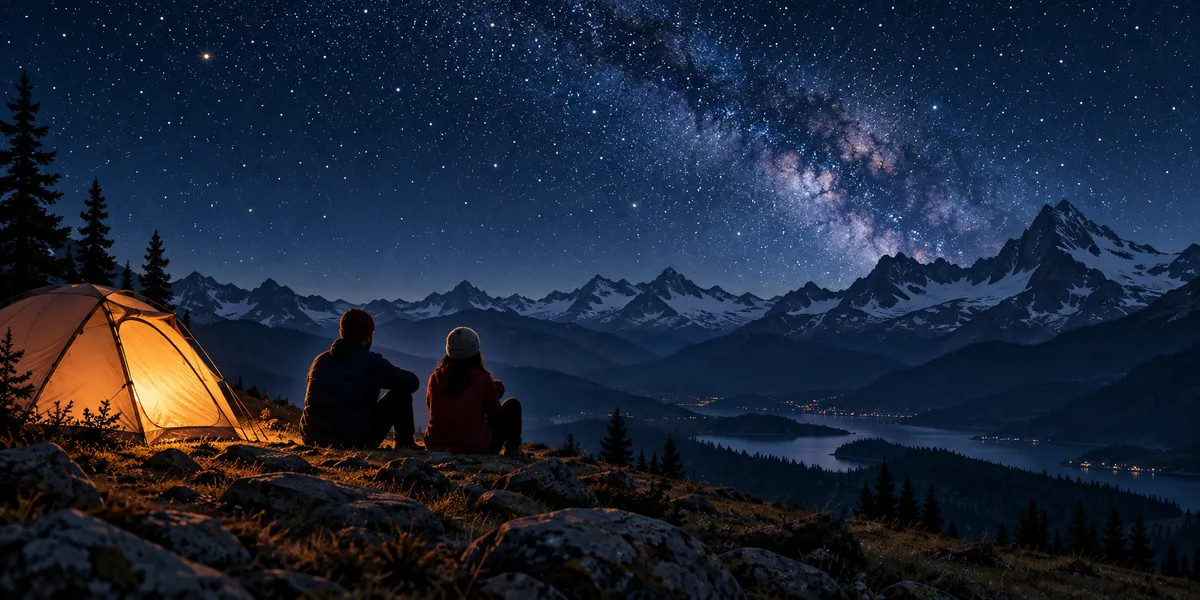
A rewarding stargazing trip starts with the conditions, rather than a shopping list. Choose a place away from bright streetlights, check the cloud forecast and look up the Moon’s phase and rising time. A new Moon, or a Moon below the horizon, makes faint objects easier to see.
The US National Park Service recommends allowing about 15 to 30 minutes for eyes to adjust to darkness. A red-light torch helps preserve that adjustment; bright phone screens and white lights can undo it. Download a star chart before leaving and keep the display dim.
Bring warm layers, a comfortable chair and drinking water. Binoculars can be useful, but a telescope is optional: learning a few constellations and watching the sky change can make a satisfying first outing.
Check opening hours, access rules and the route home before travelling. Stay on permitted paths, take rubbish away and keep noise low. Start with a nearby location so that an unexpected cloud bank means a shorter journey, then build longer trips around what you enjoy observing.