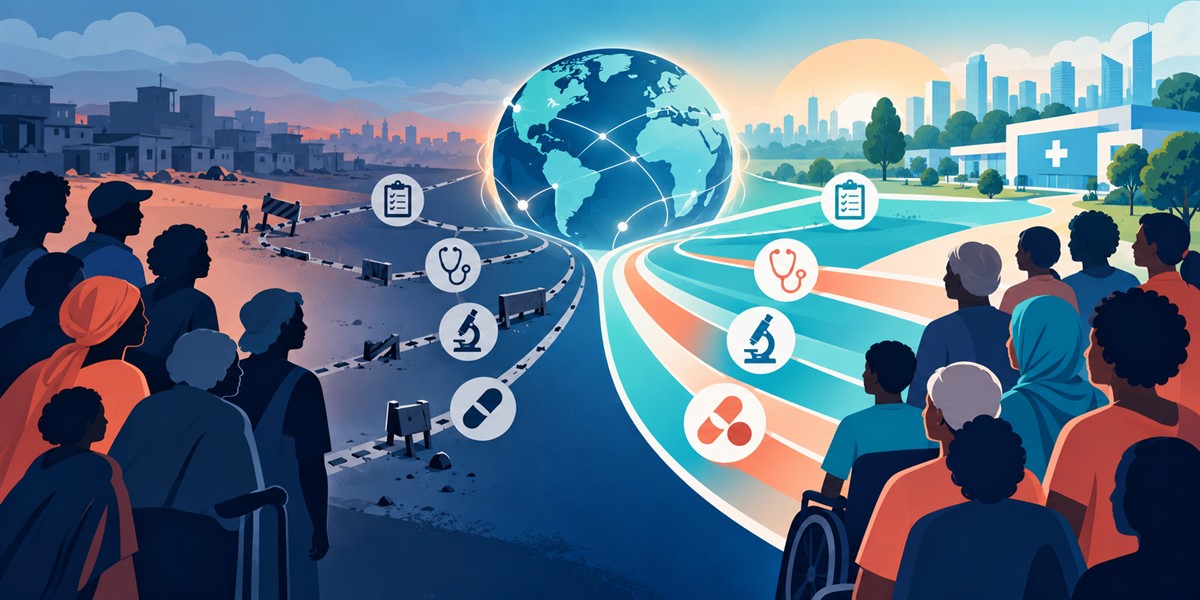

A World Health Organization report has mapped how the burden of noncommunicable diseases and access to prevention and care differ within countries. WHO describes it as the first comprehensive global assessment focused on inequalities in these conditions and their major risk factors.
The assessment covers cancer, cardiovascular disease, diabetes and chronic respiratory disease. It also considers tobacco and alcohol use, obesity and unhealthy diets, insufficient physical activity and air pollution. The report draws on nine multicountry data sources and analyses 35 indicators across as many as eight dimensions of inequality.
Those dimensions include age, sex, economic status, education, place of residence, disability, employment and migration status. WHO says the patterns are not uniform: different groups face different combinations of exposure, diagnosis gaps and barriers to treatment.
Examples of unequal risk and access
Evidence from low- and middle-income countries shows higher rates of hypertension and diabetes among less educated groups, according to WHO. Poorer and less educated women are less likely to receive cervical-cancer screening, while tobacco use remains more common among less educated men.
Geography also matters. Rural communities can face lower access to hypertension diagnosis and treatment and cervical-cancer screening, while rural households may have more exposure to household air pollution. Urban populations, by contrast, often face greater outdoor air pollution.
WHO also points to differences by age and gender. Men are more likely to use tobacco and alcohol and less likely to have hypertension diagnosed and treated. Younger adults with hypertension are less likely to receive diagnosis and treatment than older adults, while barriers related to disability, migration and unemployment can further affect prevention and care.
Data as a policy tool
The organization argues that disaggregated data can help governments direct prevention, screening and treatment toward groups that are being missed. Its accompanying advocacy brief recommends proven population-wide measures alongside targeted work to remove financial, geographic, administrative and language barriers.
The findings should not be read as one universal ranking of countries or population groups. They combine national data gathered over the past decade, and WHO identifies important gaps in comparable inequality data. Local health systems need to interpret the indicators in context and continue collecting detailed, consistent information.
The report’s central message is that national averages can conceal who benefits from health progress. Measuring differences within a country can reveal whether improved prevention or treatment is reaching rural communities, lower-income households, people with disabilities and other groups facing structural barriers.
Source: World Health Organization report summary.
Disclosure: The featured image is an AI-generated editorial illustration.